
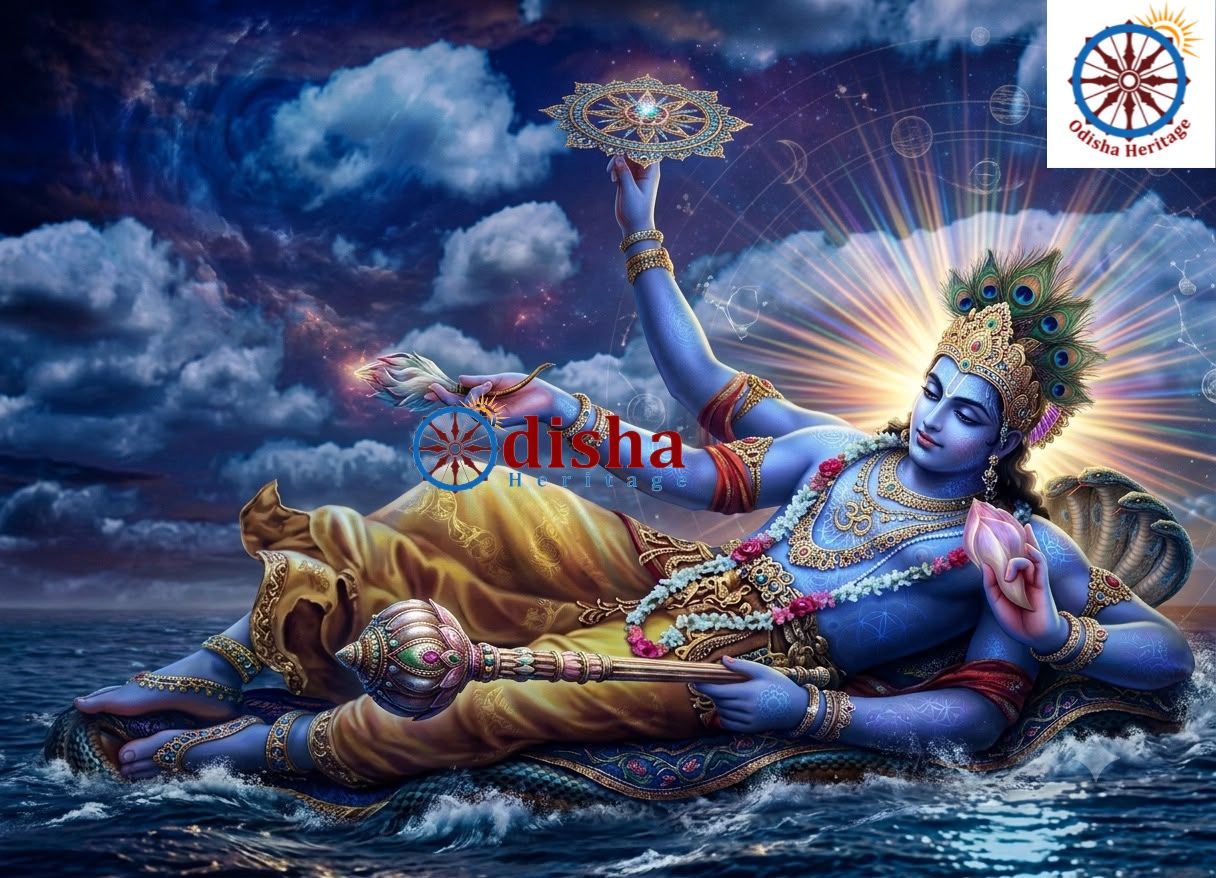

Odisha Heritage: Harishayan Ekadashi, also known as Devshayani Ekadashi or Ashadhi Ekadashi, is one of the most significant observances in the Hindu calendar. Celebrated on the Ekadashi (11th day) of the Shukla Paksha in the month of Ashadha, it marks the symbolic beginning of Lord Vishnu’s four-month divine slumber, known as Chaturmas.
According to Hindu scriptures, Lord Vishnu enters Yoga Nidra (cosmic sleep) in the Kshira Sagara (Ocean of Milk) on this day. During these four months, from Harishayan Ekadashi to Prabodhini Ekadashi in Kartik, Lord Shiva is believed to oversee the cosmic order. Chaturmas is therefore regarded as a sacred period dedicated to spiritual discipline, devotion, charity, self-restraint, and introspection.
Devotees observe a strict fast on Harishayan Ekadashi and worship Lord Vishnu with great reverence. Temples conduct special prayers, recitations of the Vishnu Sahasranama, and devotional singing. Many devotees also begin vows during Chaturmas, giving up certain foods or habits as an act of penance and self-purification.
The day also holds immense cultural significance. In Maharashtra, it coincides with the grand conclusion of the Pandharpur Wari, where lakhs of devotees undertake a pilgrimage to seek the blessings of Lord Vitthal, a revered form of Lord Vishnu. Across India, the festival inspires people to deepen their faith and embrace a life of simplicity and righteousness.
The spiritual message of Harishayan Ekadashi extends beyond rituals. It reminds us that true progress comes through discipline, inner reflection, and unwavering devotion. As nature enters the monsoon season and life slows down, the observance encourages individuals to pause, reconnect with their values, and strengthen their relationship with the Divine.
Harishayan Ekadashi is not merely the commencement of Chaturmas; it is an invitation to embark on a journey of spiritual renewal, preparing the mind and soul for a more meaningful and enlightened life.
