
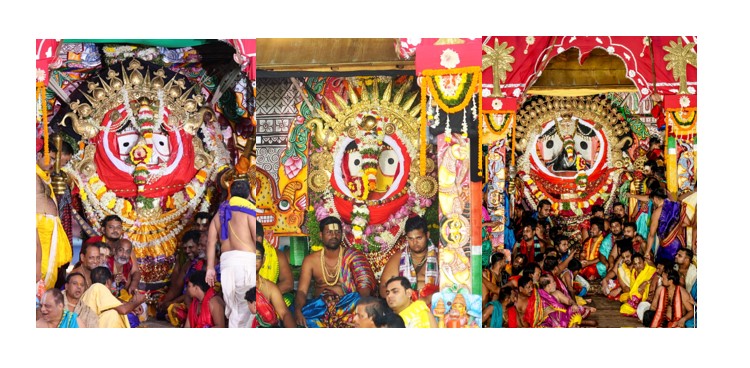

Odisha Heritage: Among the many magnificent rituals associated with the annual Ratha Jatra of Puri, Suna Besha stands out as one of the most spectacular and spiritually significant. The term Suna means gold, while Besha refers to attire or adornment. During this sacred ritual, the presiding deities of the Jagannatha Temple – Lord Jagannatha, Lord Balabhadra, and Devi Subhadra, are magnificently adorned with exquisite gold ornaments, symbolising divine majesty, prosperity, and the eternal glory of the Lord.
Suna Besha is observed four times each year, on Pousha Purnima (December–January), Dola Purnima (March), Bahuda Ekadashi (following the Bahuda Jatra in June-July), and Dussehra (September–October). While all these occasions are deeply revered, the Suna Besha performed after the Bahuda Yatra is unique and draws lakhs of devotees from across the world.
On this special day, the deities are adorned with dazzling gold ornaments while seated atop their majestic chariots stationed outside the Jagannatha Temple at the Singhadwara (Lion’s Gate). This offers devotees a rare opportunity to witness the resplendent form of the Holy Trinity in the open, creating an unforgettable spiritual spectacle. In contrast, the other Suna Besha rituals are performed inside the sanctum of the temple, where the deities are seated on the sacred Ratna Singhasana, the jewelled throne within the innermost shrine.
The tradition of Suna Besha dates back to 1460 A.D. During the reign of King Kapilendra Deva, the powerful Gajapati ruler returned victorious from military campaigns against the Deccan kingdoms, bringing with him an immense treasure of gold and diamond jewellery. The chief Tadhau servitor of the Jagannath Temple advised the king to dedicate the entire treasure to Lord Jagannath as an offering of gratitude.
Accepting this sacred counsel, King Kapilendra Deva donated the ornaments, which were then transformed into intricately crafted golden embellishments for Lord Jagannatha, Lord Balabhadra, and Devi Subhadra. This historic act laid the foundation for one of the temple’s most cherished traditions.
Beyond its breathtaking grandeur, Suna Besha embodies the timeless message that all worldly wealth ultimately belongs to the Divine. The golden adornments are not merely symbols of opulence but expressions of devotion, humility, and gratitude. Every year, as the deities appear in their radiant golden attire, devotees are reminded that true prosperity lies in faith, righteousness, and selfless surrender to the Lord.
More than five centuries later, Suna Besha continues to inspire awe and devotion, reaffirming the enduring spiritual and cultural legacy of Lord Jagannatha and the sacred traditions of Puri.
