
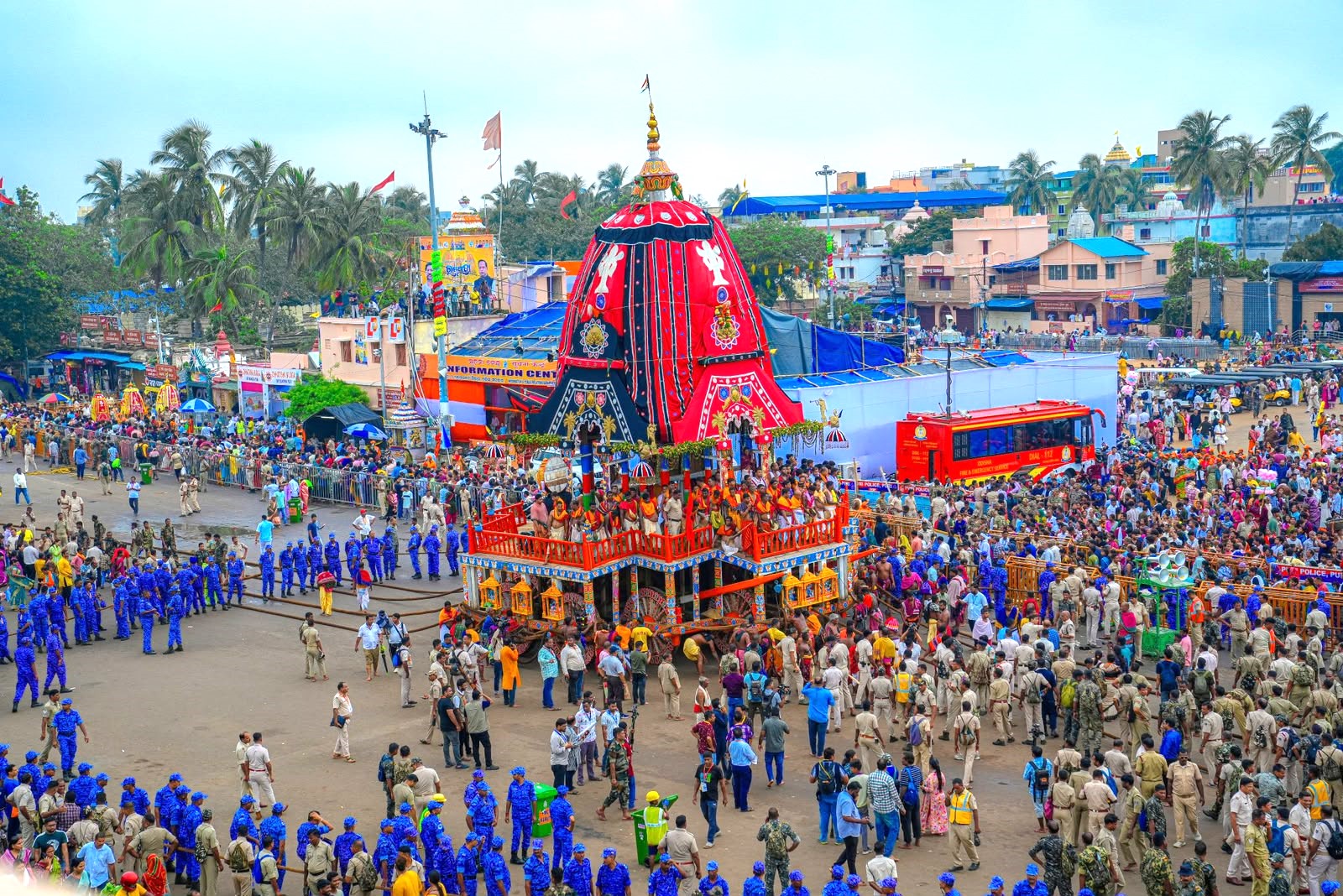

Odisha Heritage: Ratha Dakshina Moda (Southward Turning of the Chariots) is one of the most significant rituals of the annual Ratha Jatra of Lord Jagannatha. This ceremony marks the beginning of the divine journey back from the Adapa Mandap at the Gundicha Temple to the Ratna Singhasana (jeweled throne) inside the Jagannatha Temple.
As per tradition, the ritual is held on the day following Hera Panchami. After the completion of the Sakala Dhupa rituals at the Gundicha Temple, three Palia Puja Pandas carry the Agyanmalyas (sacred garlands symbolizing the Lord’s command) of Lord Jagannatha, Lord Balabhadra, and Devi Subhadra. Accompanied by temple bells, ceremonial umbrellas, and kahali trumpets, these garlands are offered to the three chariots, signifying the Lord’s permission to begin their return journey.
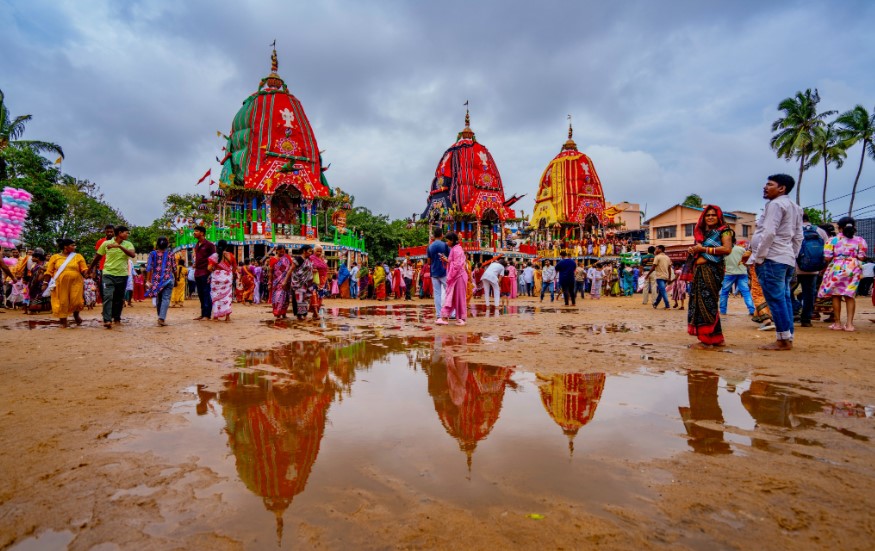
Following this ritual, the three chariots are turned southward. According to tradition, Devi Subhadra’s Darpadalana is moved first, followed by Lord Balabhadra’s Taladhwaja, and finally Lord Jagannatha’s Nandighosha. The chariots, initially stationed at the Singhadwara (Lion’s Gate) of the Gundicha Temple, are gradually repositioned near the Nakachana Gate, facing south in preparation for the Bahuda Jatra.
Unlike the grand public pulling of the chariots during Ratha Jatra, the Dakshina Moda is performed primarily by temple officials, servitors, members of the Ratha Directorate, and government police personnel. In earlier times, labourers (Kala Bethias) and even elephants were employed to assist in the difficult task of turning the massive wooden chariots.
The process itself is highly intricate. Ropes are tied to both the front and rear of each chariot, and they are moved alternately forward and backward several times. This careful manoeuvring gradually aligns each chariot in a south-facing direction before the Nakachana Gate. The operation demands precision, coordination, and considerable physical effort.
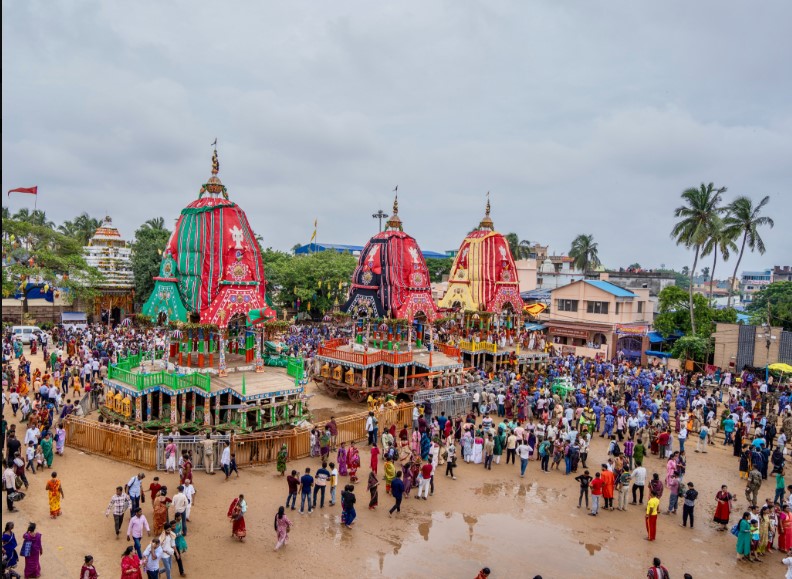
Traditionally, the Dakshina Moda takes two days to complete, although historical records indicate that in some years the entire process was finished within a single day. Throughout the ritual, Ghantuas continuously ring ceremonial bells while Dakuas stand atop the chariots singing traditional Ratha songs. Bhoi and Maharana servitors also play an essential role in assisting the movement of the chariots.
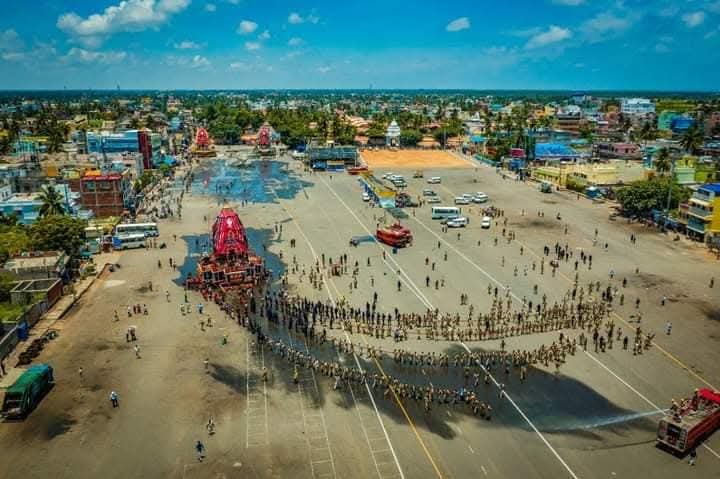
Before 1985–86, the stretch of road between the Gundicha Temple and Bada Shankha remained significantly lower than its surroundings, causing rainwater to accumulate up to two or three feet deep on both sides during the monsoon. As a result, turning the colossal chariots southward was an extremely challenging task. Improvements in road infrastructure in later years have made the ritual comparatively smoother, while preserving its centuries-old spiritual significance.
The Ratha Dakshina Moda is far more than a logistical exercise—it is a sacred transition that signals the imminent return of the Holy Trinity to the Shree Jagannath Temple, filling devotees with anticipation for the auspicious Bahuda Jatra.
