
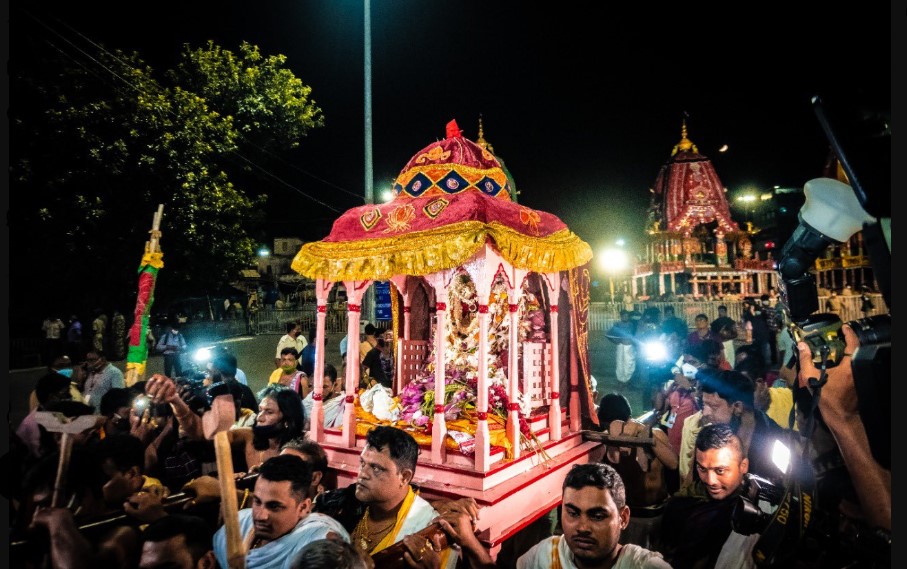

Odisha Heritage: The fifth day of the world-famous Ratha Jatra is observed as Hera Panchami, one of the most unique and symbolic rituals associated with Lord Jagannatha. Derived from the words ‘Hera’ (to search) and ‘Panchami’ (the fifth day of the bright fortnight of the Hindu month of Asadha), the ritual beautifully portrays the divine yet relatable bond between Lord Jagannatha and Goddess Lakshmi.
The tradition commemorates Goddess Lakshmi’s visit to the Gundicha Temple after Lord Jagannatha, accompanied by His siblings Lord Balabhadra and Devi Subhadra, departs for His nine-day stay at the temple, popularly regarded as His aunt’s abode. Left behind at the Shree Jagannatha Temple, Goddess Lakshmi sets out in a ceremonial procession to search for the Lord.
Upon reaching the Gundicha Temple, the Goddess finds its doors closed. To appease Her, Lord Jagannatha offers the Agyan Mala, a sacred garland signifying His assurance that He will soon return to the Shree Jagannatha Temple. The offering symbolizes reconciliation and the Lord’s promise to end His stay without delay.
Before returning, Goddess Lakshmi expresses Her displeasure by directing Her servitors to break a small piece of wood from Nandighosha, Lord Jagannatha’s chariot. The symbolic act serves as a playful reminder of Her anger over being left behind and denied entry into the Gundicha Temple.
Rich in symbolism and devotional significance, Hera Panchami remains one of the most cherished rituals of the Ratha Jatra, reflecting timeless themes of love, longing, separation and reunion within the sacred traditions of Lord Jagannatha.
