
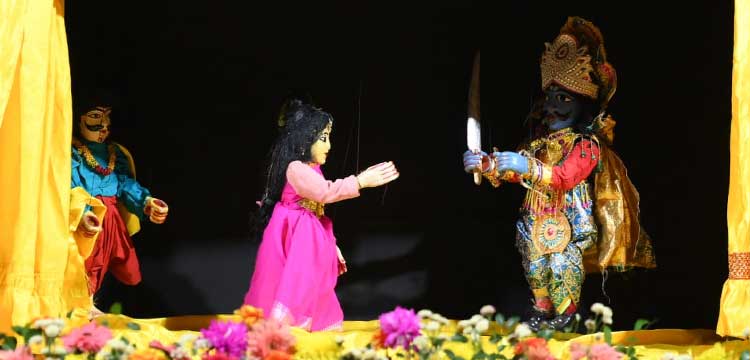
Threads of Tradition Come Alive: Kandhei Natak Festival Celebrates India’s Puppet Heritage
Organised by the Odisha Sangeet Natak Akademi with support from the Odia Language, Literature and Culture Department, the two-day celebration from December 18 to 19 became a vibrant confluence of tradition, creativity and collective heritage.

The timeless art of puppetry unfurled its many hues at Bhanja Kala Mandap as the National Kandhei Natak (Puppet Theatre) Festival breathed life into strings, shadows and stories rooted in India’s cultural memory. Organised by the Odisha Sangeet Natak Akademi with support from the Odia Language, Literature and Culture Department, the two-day celebration from December 18 to 19 became a vibrant confluence of tradition, creativity and collective heritage.
Bringing together some of the finest puppetry exponents from Odisha and beyond, the festival offered audiences a rare and immersive journey through India’s diverse puppet traditions. Eight troupes from different parts of Odisha shared the stage with five renowned groups from Kerala, Karnataka, Rajasthan and West Bengal, creating a national platform where varied styles, narratives and techniques coexisted in harmonious dialogue.
The festival was inaugurated by Dr. Bijay Ketan Upadhyay, Secretary of the Odia Language, Literature and Culture Department, who attended as the chief guest. In his address, Dr. Upadhyay highlighted Kandhei Natak as a living cultural expression deeply woven into the social fabric of Odisha’s villages and towns. He praised the Odisha Sangeet Natak Akademi for its sustained efforts to revive and nurture traditional art forms and expressed hope that such national-level initiatives would inspire younger generations to reconnect with the state’s rich cultural legacy.
Adding depth to the inaugural session, Deba Prasad Dash, Special Secretary of the Culture Department, spoke about the wide spectrum of puppetry traditions practised across India, underlining their shared roots and regional uniqueness. Renowned actor Harihar Mahapatra, in his interaction with the artists, acknowledged their dedication and resilience in keeping traditional performing arts alive in an era of rapid cultural change.
The opening evening unfolded as a visual and emotional spectacle. The audience was greeted with “Vande Mataram” by Shri Ram Chhayanatak Gabeshana from Khamar in Angul district, a performance that set a patriotic and evocative tone. This was followed by a series of enthralling presentations, including Sakhi Kandhei Natak by Parmeshwar Singh of Kendrapara, Gopaleela Kandhei Natak by Jagabandhu Behera of Bhanjanagar, Ravana Chhaya by Gouranga Charan Das of Angul, and Ramaleela Kandhei Natak by Chakradhar Parida of Keonjhar, each reflecting the narrative richness and technical finesse of Odisha’s puppetry traditions.
Among the special attractions were a contemporary Kandhei Natak interpretation by Amarendra Nath Naskar from West Bengal’s 24 Parganas, which seamlessly blended tradition with modern sensibilities, and a powerful shadow play performance by Gunduraju from Karnataka that mesmerised the audience with its dramatic interplay of light and movement.
As the performances unfolded, Bhanja Kala Mandap resonated not only with applause but also with a shared sense of reverence for an art form that has survived centuries through oral tradition and skilled craftsmanship. Many audience members expressed the hope that such national-level festivals would be organised regularly to ensure the continued growth and survival of traditional puppetry.
Rooted in both string puppetry forms like Sakhi Kandhei and shadow traditions such as Ravana Chhaya, Kandhei Natak stands as a testament to Odisha’s artistic soul. The National Kandhei Natak Festival not only celebrated this heritage but also reaffirmed its relevance, reminding audiences that these delicate puppets still carry powerful stories, stories that deserve to be seen, heard and cherished.
