
The Spiritual Significance of Panchuka
Panchuka, derived from the word 'panch' meaning five, marks the final phase of the sacred Kartika month.

As the holy month of Kartika nears its end, the last five days known as Panchuka hold a special place in the hearts of Odias and Vaishnav devotees across India. Panchuka, derived from the word ‘panch’ meaning five, marks the final phase of the sacred Kartika month, a period deeply intertwined with devotion, restraint, and purity. For many, it is not merely a ritual but a spiritual culmination of a month-long journey toward self-control and divine connection.
During Panchuka, devotees observe strict abstinence from non-vegetarian food and lead a life of prayer, simplicity, and compassion. Even those who might have relaxed their Kartika observances earlier become deeply devoted in these last days, considering them especially auspicious. The five days are believed to be a time when Lord Vishnu, who is said to be in deep slumber during Chaturmasya prepares to awaken on the final day, Prabodhini Ekadashi. Therefore, these concluding days are marked by increased rituals, fasting, and acts of piety.
In Odisha, the significance of Panchuka extends beyond temples and individual devotion, it is woven into the social and cultural fabric of daily life. From the grand rituals at the Jagannath Temple in Puri to the small lamps glowing in village homes, the spirit of reverence fills every corner. Devotees refrain from harming any living being, a practice symbolizing compassion toward all creatures. Even fishermen avoid casting their nets, and farmers pause activities that may cause harm to insects or animals.
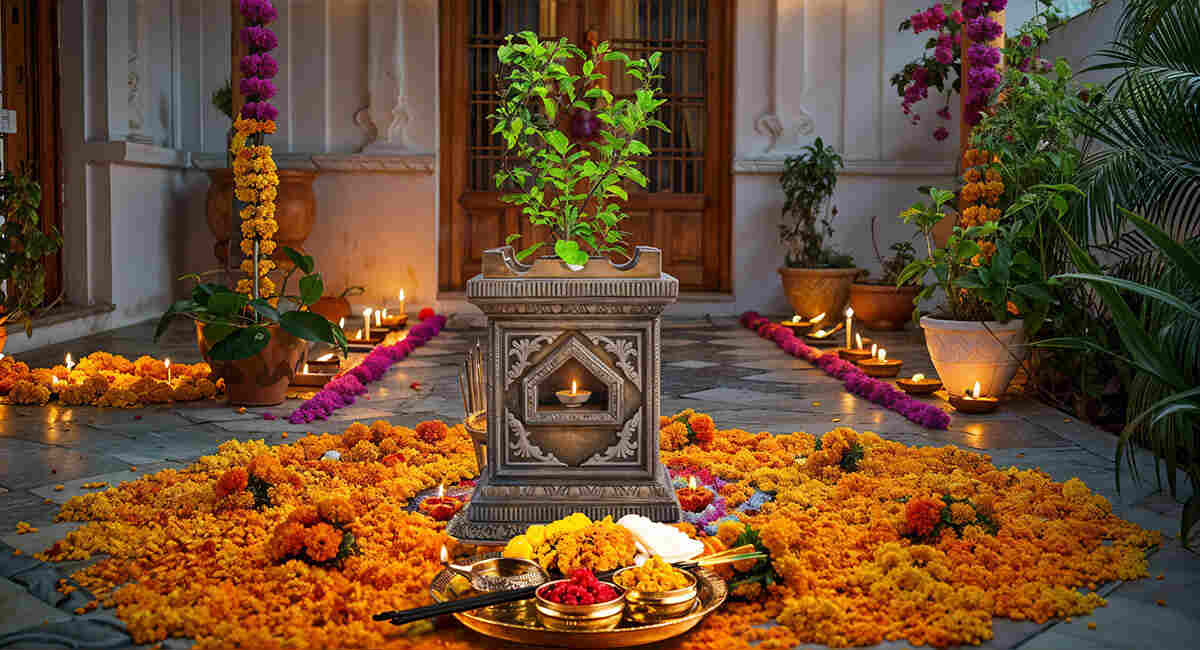
Women play a central role during this period, waking before dawn to light lamps, recite hymns, and offer prayers for the well-being of their families. The evenings are filled with devotional songs, tales from the Jagannath Purana, and communal gatherings that strengthen the bonds of faith and fellowship. On the last day, known as Kartika Purnima, devotees take holy dips in rivers or ponds and offer prayers to Tulasi, marking the symbolic conclusion of Kartika Brata.
Spiritually, Panchuka is seen as a time of purification of mind, body, and soul. It teaches the values of restraint, empathy, and gratitude, reminding one to live in harmony with nature and all beings. For the devout, it is a moment to reconnect with the divine essence that governs life and to renew their moral and spiritual commitments before stepping into the new lunar cycle.
Panchuka stands as a bridge between the mortal and the divine, between devotion and discipline. It is not just a religious observance but a living tradition that continues to guide generations toward a path of inner peace, compassion, and enlightenment.
