
Reviving the Soul of Rural Odisha: The Return of Bhagabata Tungis
These modest places, called Bhagabata Tungis, were not only houses of faith, they were dens of wisdom, culture, and community.

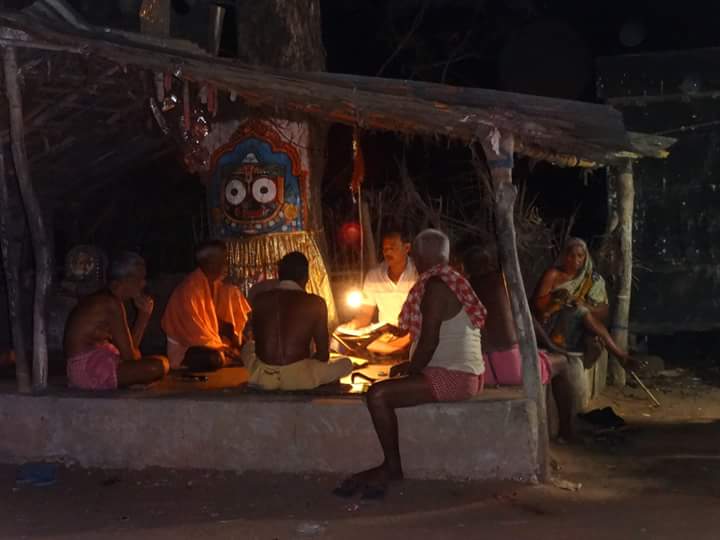
Deep in the villages of Odisha, with the sun setting behind the hills and the fields lying in repose after the day’s labor, stood small thatched huts aglow with the oil lamp light and the low vibrations of piety. These modest places, called Bhagabata Tungis, were not only houses of faith, they were dens of wisdom, culture, and community. Here, villagers would meet every night, not only to hear scriptures but to listen to stories, discuss philosophies, and reinforce the ties that kept rural society intact.
Now, decades after so many of these spiritual centers went into oblivion, Odisha Chief Minister Mohan Charan Majhi has declared a grand plan to resurrect Bhagabata Tungis in all villages throughout the State. Addressing the Srimad Bhagavad Mahotsav, Majhi set hope alight for a cultural revival based on the principles that have defined Odisha’s spiritual heritage for millennia. His dream of a Bhagavad in every Odia household and a Bhagabata Tungi in every village is one that tallies completely with a returning to the roots coupled with sensitizing the younger generation to a way of moral and spiritual illumination.
Historically, the Bhagabata Tungi was more than a prayer hall. It was an open-air school, where the elderly would impart the teachings of the Bhagavata Purana on the eager ears of young listeners. It was where the collective memory was kept alive through recitation, narration, and singing. These places fostered not only religion but also empathy, tolerance, and values of dialogue that served as the foundation of Odia society. Reviving them, in that sense, is not merely a matter of reconstructing cottages but of reconstructing the moral architecture of community life.
Chief Minister Majhi’s emphasis on the teachings of the Srimad Bhagavad Gita reflects a deep understanding of how spiritual learning can guide youth through the complexities of modern life. “Learning the Bhagavad Gita is a powerful means to guide them on a spiritual path,” he said, underlining how its timeless wisdom continues to inspire right action and clarity of thought. The Chief Minister feels that these teachings—grounded in the teachings of God, life, nature, time, and karma—have the ability to re-establish harmony between human aspiration and cosmic order.
Festivals such as the Srimad Bhagavad Mahotsav, Majhi noted, reinforce the bonds of devotion, respect, and oneness that knit society together. They remind human beings of the pleasure of shared celebration, in which spirituality and culture go hand in hand. Through the revival of the Bhagabata Tungis, the government aims to revive that same public warmth—where religion finds expression in everyday life, and spirituality becomes a natural part of social and cultural existence.
In a time of digital distractions and city isolations, the concept of a community hall space dedicated to reflection and learning feels both old-fashioned and vital. The rejuvenation of Bhagabata Tungis is therefore not merely nostalgia for bygone times, it is an attempt to reclaim a future where wisdom and communal bonds illuminate the villages of Odisha, lamp by lamp.
