
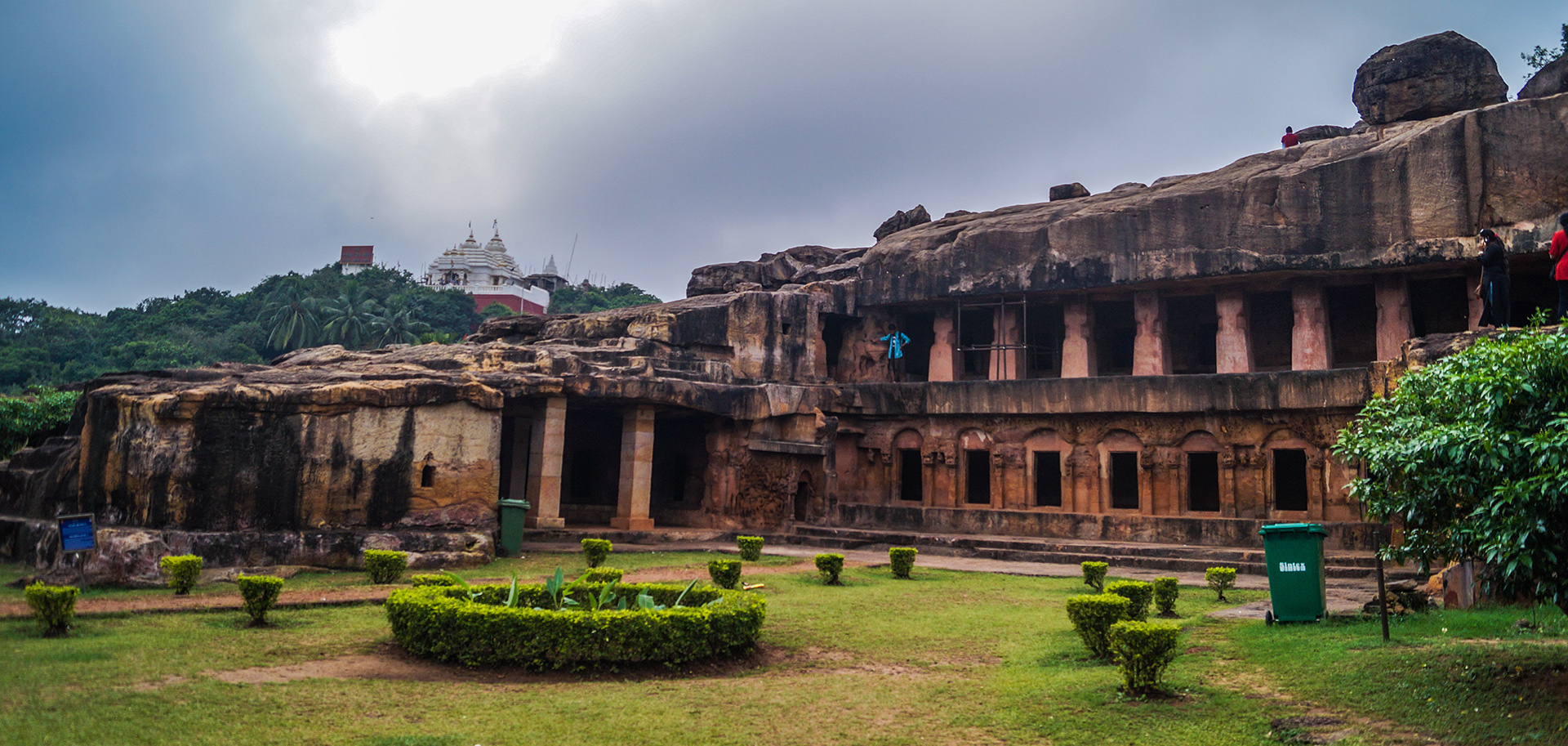

Lying peacefully in the lap of Bhubaneswar, the ancient Khandagiri and Udayagiri caves have witnessed centuries pass by, of empires, religions, and shifting times. But now, these legendary twin hills are set to enter a new era. The Odisha Tourism Development Corporation (OTDC) has prepared an ambitious redevelopment proposal to revive their declining glory while providing tourists with a richer, more engaging experience.
Sculpted out of a single piece of rock in the 2nd century BCE, the caves are eternal tributes to the skill and spiritual commitment of an age dominated by King Kharavela of the Mahameghavahana dynasty. Over 30 caves carved into sandstone hills previously housed Jain monks, their walls lined with delicate carvings, inscriptions, and motifs that reflect not only the ascetic simplicity of their lives but also the pomp of regal authority. But years have worn it down. Wind, rain, and human disinterest have worn away the intricate carvings, and the need for it to be preserved is now one of urgency.
Met with this requirement, the OTDC has forwarded a Detailed Project Report to the National Monument Authority for sanction. The project, to be undertaken in collaboration with the Archaeological Survey of India (ASI), mingles preservation with contemporary tourism requirements, an effort to pay homage to the past and welcome the present.
After approval, the visitors can look forward to a completely new experience. The redevelopment plan encompasses better approach roads and pedestrian paths, facilitating easy and barrier-free mobility for the elderly and differently abled. To minimize pollution and preserve the peaceful ambiance, electric shuttles will silently move around the site, providing quiet trips over the hilly terrain.
Plans also feature an interpretation centre to lead visitors through the caves’ history, a cafeteria for local delicacies, and rest areas shaded by environmentally friendly shelters. A standout feature of the project will be an open-air amphitheatre, conceived as a place where Odisha’s classical and folk traditions can come alive against the background of the ancient hills. Here, art will encounter archaeology in an environment rich in history.
Handling the constant flow of tourists and pilgrims is another priority area. Dedicated entry and exit paths will be created for the Jain and Barabhuja temples that sit atop the complex, while new parking lots will assist in traffic regulation. But the vision goes much deeper than that.
Ecological conservation is at the core of the project. The proposal involves preserving the 450 species of medicinal herbs that grow naturally in the vicinity of the caves and beautifying the landscape with native vegetation. Local materials and green building practices will be used to ensure that each new addition honors the essence of the location.
Officials believe the makeover will not just restore the caves but also position them as Odisha’s leading heritage destination, a site where history, spirituality, and nature meet. The project is also part of the state’s larger tourism plan, which aims to promote key culture and ecology circuits, from Puri temple corridors and Konark sun-kissed wonders to the peaceful shores of Chilika.
The Khandagiri–Udayagiri complex has long attracted pilgrims following the Jain heritage trail, as well as visitors swept up by its carved histories and serene majesty. After redevelopment, it will lead a new generation of adventurers, those who want not only to witness, but to experience the living heartbeat of history.
By breathing life into these old stones, Odisha is not only restoring a monument but reawakening an heritage.
