
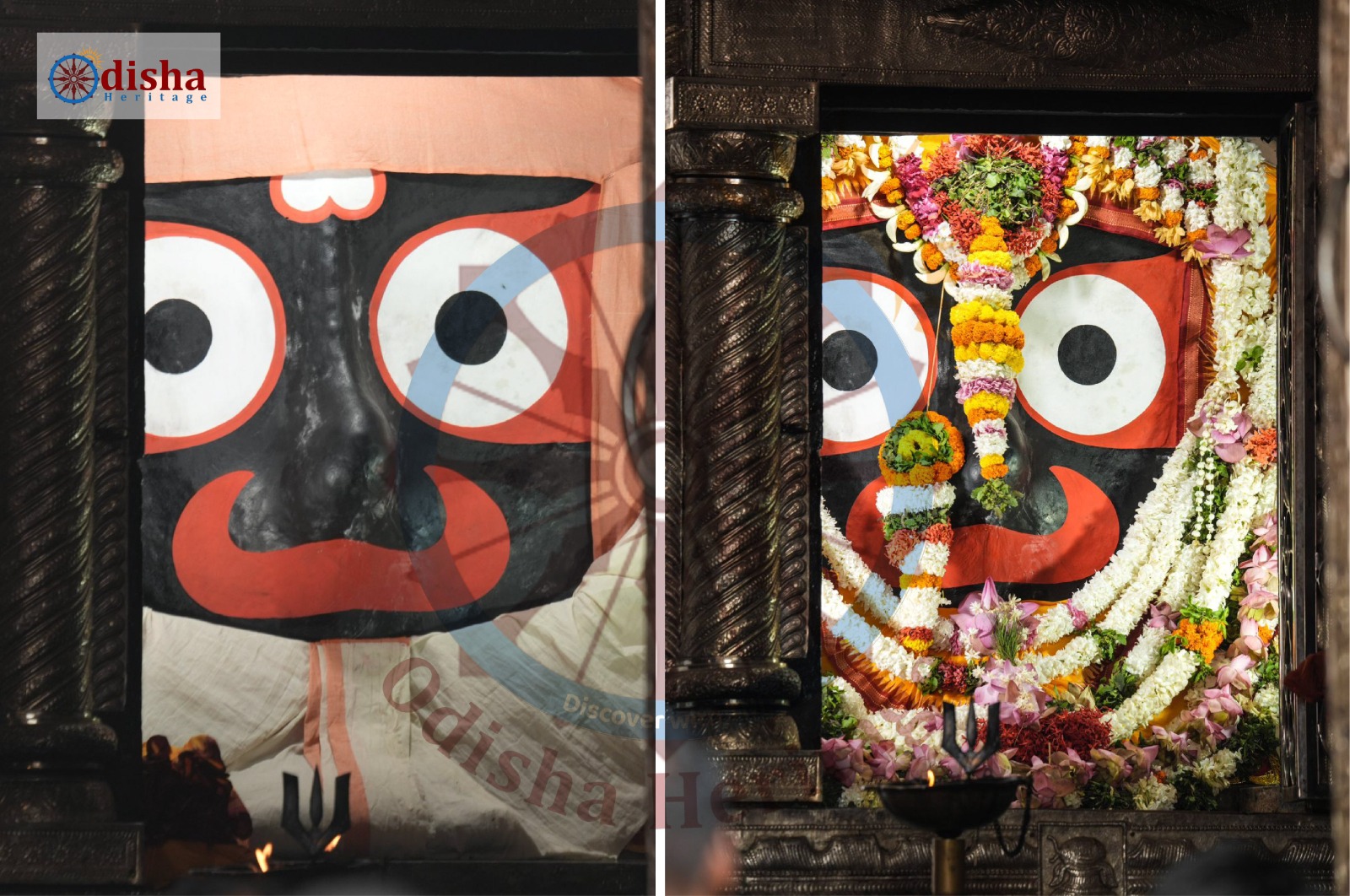
Nabajouban Darshan: Divine Trinity Reappears in Youthful Glory Ahead of Ratha Jatra
These age old rituals hold immense religious and emotional significance for Jagannath devotees, marking the ceremonial reappearance of Lord Jagannath, Lord Balabhadra, and Devi Subhadra after a 15-day period of seclusion known as Anasara.

A day ahead of the much anticipated Ratha Jatra, the holy town of Puri transformed into a sea of spiritual fervor as thousands of devotees thronged the Shree Jagannath Temple to witness the sacred rituals of Nabajouban Darshan and Netrotsav on Thursday.
These age old rituals hold immense religious and emotional significance for Jagannath devotees, marking the ceremonial reappearance of Lord Jagannath, Lord Balabhadra, and Devi Subhadra after a 15-day period of seclusion known as Anasara.
The Period of Divine Absence
According to centuries old temple tradition, following the Snana Purnima, the grand bathing festival, the three deities are believed to fall ill due to exposure to water and are kept in isolation within the Anasara Ghara (recovery chamber). During this period, devotees are deprived of their darshan, leading to a spiritual emptiness in the temple town. The anticipation for their reappearance builds up as the days pass, culminating in the visually and emotionally moving Nabajouban Darshan.
What is Nabajouban Darshan?
Falling on Amavasya, the new moon day of the Odia month of Ashadha, Nabajouban Darshan is a rare and cherished occasion. The term “Nabajouban” translates to “new youth,” and on this day, the deities are revealed in their rejuvenated, youthful forms vibrant, radiant, and adorned with fresh attire and ornaments. This transformation is part of the belief that the deities have regained their health and vitality.
A key ritual that takes place alongside is Netrotsav, the ceremonial restoration of the deities’ eyes. Using natural herbal mixtures and traditional paints, the priests symbolically restore the Lords’ divine vision signifying their readiness to reengage with the world and their devotees. This act of healing is seen as a deeply compassionate gesture, a sign of the Lord’s personal involvement in human emotions and experiences.
Spiritual Significance
The Nabajouban Besha is one of the most spiritually significant and visually enchanting appearances of the Lords. Unlike their usual form atop the Ratna Singhasana (jeweled throne), the deities remain at ground level during this darshan. This humble form is considered especially accessible, and many believe that a glimpse of the Lords on this day brings immense blessings and renewed hope.
This reappearance also symbolically sets the stage for the Ratha Jatra, the grand chariot festival, on June 27. The Nabajouban Darshan is thus not merely a ritual, but a divine prologue to the epic journey that follows when the deities step out of the sanctum and ride their majestic chariots through the streets of Puri, bestowing grace upon millions.
Anticipation Builds
With the completion of Nabajouban Darshan, a tide of devotion has swept over Puri. The spiritual atmosphere is electric with chants, prayers, and preparations as the town readies itself for one of the world’s largest and most unique religious processions.
As the chariots stand decorated and the servitors prepare for their sacred duties, the Lords refreshed, radiant, and full of divine vigor are now ready to begin their annual journey among their devotees.
The soul of Odisha is once again stirred by the timeless rhythm of devotion, as Ratha Jatra draws near, and the Lords of the Universe prepare to ride out into the hearts of the people.
