
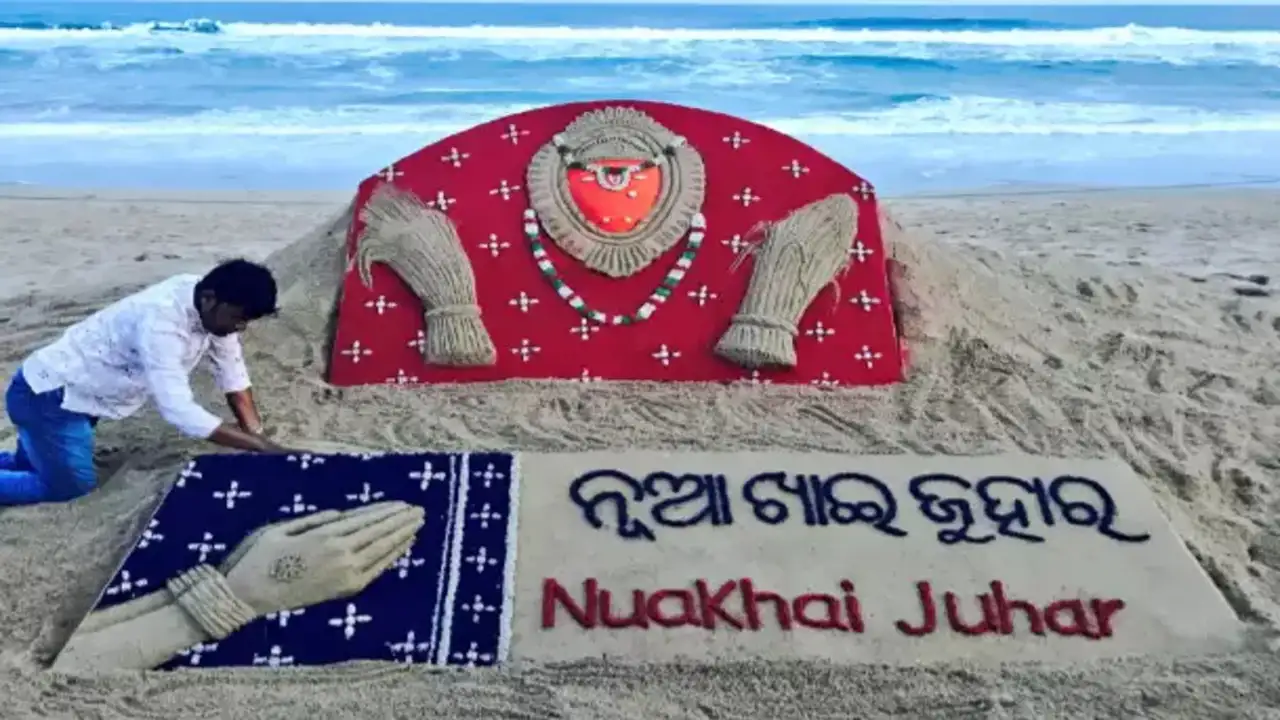
Decoding Nabanna: Why The Offering Time Varies From Place to Place
Western Odias look upon traditional legends to find out the propitious time of Nuakhai, the rural harvest festival.

Western Odisha folks are observing the sacred Nuakhai today. The festival starts with the offering of Nabanna, the first harvest of the season.
But, did you know that there are varying Nabanna times for varying regions of western Odisha?
Western Odias look upon traditional legends to find out the propitious time of Nuakhai, the rural harvest festival.
Though the whole state celebrates the festival on the same date, the actual time of the Nabanna offering ritual, the inaugural rice from the new crop, varies place to place.
The reason behind this is the strongly held belief that the presiding deity of each region determines the favorable moment.
In Bolangir, the time is determined according to Maa Patneswari; in Sambalpur, Maa Samaleswari; in Sonepur, Maa Sureshwari; in Kalahandi, Maa Manikeswari; in Boudh, Maa Bhairavi; and in Nuapada, Maa Raktambari.
The rituals are determined on the basis of zodiac signs and constellations (rashi and nakshatra) associated with the respective deities.
What makes the practice all the more special is that despite the contemporary communication revolution, the practice of sending letters continues. Royal priests (raj purohit) continue to send written orders to village landlords (zamindars), headmen (gaonntia), and community leaders (kumura), who subsequently hold meetings to make preparations for the festival.
Conventional panels of experts are called to settle the timing, and once fixed, word spreads not via smartphone but via the thunderous beats of the ‘dingura bala’.
The instant that the drumbeats resonate in the hamlets, villagers start getting into action, setting up special markets, conducting rituals, and preparing their homes to receive the sacred Nabanna offering.
Although technology has transformed all areas of contemporary life, Nuakhai still keeps human beings attached to their past, reaffirming that religion and culture are ageless.
