
The mystery behind Odisha’s fish offering tradition in Goddess temples
Within Hindu belief systems, matsya has long held a place of reverence.

Fish glimmers in Odisha’s ritual tapestry like a silver scale catching sunlight, ancient and essential, swimming quietly through the centuries. It is more than nourishment. It is symbol, sacrament, presence. Within Hindu belief systems, matsya has long held a place of reverence. The tantric tradition counts fish among its panchamakara, those deeply coded elements beginning with the letter “ma” that signify life’s primal urges and spiritual awakenings: mamsa, madya, mudra, maithuna and matsya. Their inclusion reflects a time when faith grew from the soil, rivers and instincts that shaped early communities. Spirituality wasn’t distant; it sat smoking in the kitchen hearth, fragrant with mustard oil.
In Odisha, religion still keeps one foot submerged in living water. The Jagannatha Temple at Puri, known universally as a great bastion of Vaishnav devotion, carries within it a quieter story. On Durga Ashtami, fish from the sacred Markanda tank is offered to Goddess Vimala. She presides over tantric energies that predate the temple’s current identity. The offering never crosses the grand gateways used by devotees. It slips instead through a smaller, designated passage, a respectful compromise between Vaishnav vegetarianism and the temple’s esoteric past. Ritual adapts without forgetting.
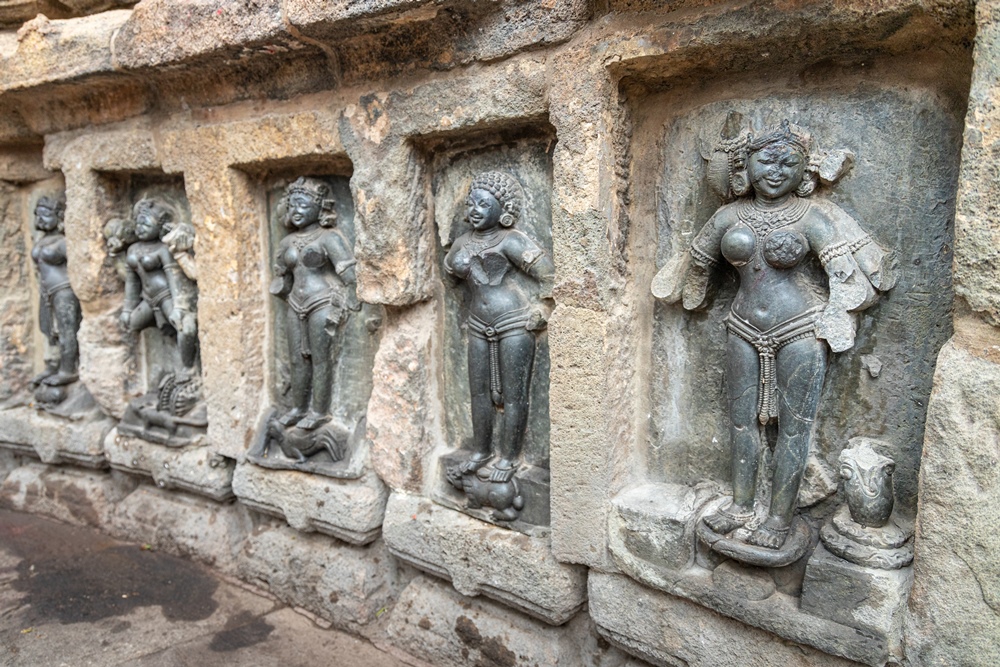
The Chausath Yogini Temple at Hirapur, that enchanting circular shrine near Bhubaneswar, stands as another piquant reminder. Yoginis dance in stone, fierce and free, and on ordinary days they accept fruits, rice and khoya. Durga Ashtami, however, demands something wilder-fish, incinerated to ash, fed to the sacred fire in remembrance of powers older than history’s script.
To stroll through Puri’s Bali Sahi is to meet Varahi, the boar-headed goddess holding a fish in one of her four hands. She owns her appetite proudly. Non-vegetarian offerings, especially fish, form an essential part of her worship. Her shrine is tended by Brahmin priests who acknowledge that divinity does not always seek austerity. Sometimes, it revels in taste.
At Baliharchandi Temple in Brahmagiri, the sea whispers blessings. Here the goddess dines on fish plucked from the brackish depths of Chilika Lake. Cooked in mustard gravy, the dish is not merely food but a ritual pact between water, deity and human devotion. Every offering carries the scent of the wind, the echo of paddles hitting the surface, the breath of life that rivers deliver.
Across Odisha, the divine swims along the same currents as everyday life. The fish on a family’s plate, the fish honored in a shrine, these are not separate worlds. They speak to each other. They remember the same ancient waters. Rituals here do not shy away from the primal or label the living world impure. Memory flows through rivers, and faith follows that flow.
The sacred does not always sit on a pedestal. It may flick its tail beneath temple steps or wait patiently in a fisherman’s net. In this land where gods relish mustard and brine, spirituality moves with the tide, reminding us that holiness can be savory, and sometimes it arrives wrapped in a banana leaf.
