
What is Dakshina Moda ritual of three chariots in Puri?
It is not just a physical repositioning of giant wooden structures; it marks a spiritual shift, a readiness, a longing, and the anticipation of return.

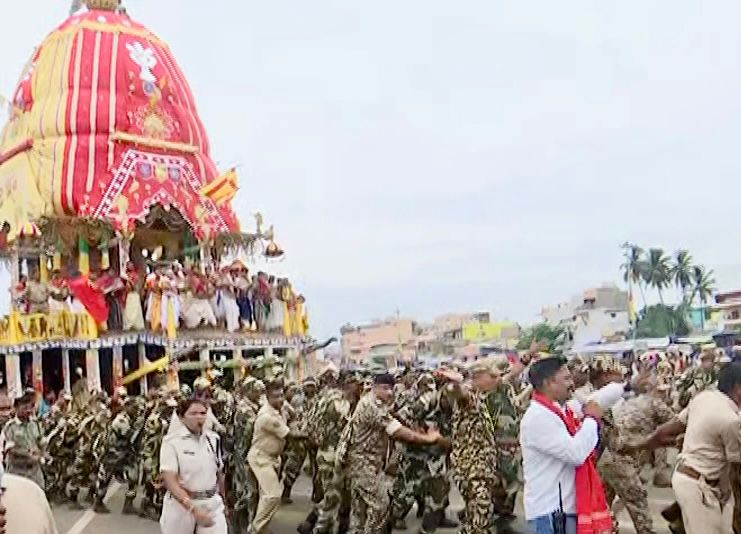
On the sixth day of the divine sojourn during Rath Yatra in Puri, a quiet yet profoundly symbolic ritual unfolds, Dakshina Moda, the southward turn of the Holy Trinity’s chariots. It is not just a physical repositioning of giant wooden structures; it marks a spiritual shift, a readiness, a longing, and the anticipation of return. This ancient practice signals the beginning of Bahuda Yatra, the return journey of Lord Jagannath, Lord Balabhadra, and Devi Subhadra to their eternal home, the Shree Jagannath Temple.
Since the day of the grand Rath Yatra, when the sibling deities are ceremoniously brought out from the sanctum of Srimandir and taken in a divine procession to the Gundicha Temple, the three chariots Nandighosha, Taladhwaja and Darpadalana, stand like sentinels of devotion at Saradhabali, facing north toward their temporary abode. Here, they have rested for several days, silently bearing witness to rituals, offerings, and the surging sea of devotees who come for a rare glimpse of the deities outside their temple.
But as the days pass, the pull of the original abode grows stronger. The city breathes in a different rhythm on the sixth day, the day of turning. Dakshina Moda is not a grand spectacle like Rath Yatra itself; it is a quiet assertion of the inevitable return, of homecoming.
The ritual begins with the arrival of the Agyan Mala, the garland of divine consent. Three Pujapanda servitors, traditional temple priests, approach each chariot bearing this garland, which signifies the Lord’s approval to proceed. One by one, the massive chariots are carefully turned southward. First, Devi Subhadra’s Darpadalana moves, followed by Taladhwaja of Lord Balabhadra, and finally, Lord Jagannath’s Nandighosha completes the turn.
There is a quiet grace to this moment. The chariots are then drawn near the Nakachana Dwara, the eastern gate of the Gundicha Temple, where they will await the final leg of their journey, Bahuda Yatra.
Preceding this ritual is Hera Panchami, observed on the fifth day, when Goddess Lakshmi symbolically visits the Gundicha Temple in a moment of divine jealousy and playful confrontation. This sets the emotional tone of longing, separation, and reconciliation that resonates deeply with devotees.
Dakshina Moda may seem like a mere logistical necessity, but in the Jagannath tradition, every act, every movement of the deities, is imbued with meaning. This simple turn is a metaphor for life’s cycles departure, longing, and return. It reminds us that even gods long for home, and their journey just like ours, is a dance between movement and rest, between the world outside and the sanctity of belonging.
