
Reinventing Haripurgarh: The Forgotten Fort of Mayurbhanj
Known as Banakatigada a fort built after clearing forests Haripur served as the capital of the Mayurbhanj state between the 14th and 17th centuries, following the destruction of their earlier capital, Khiching, by Sultan Feroz Shah Tughlaq in 1361 AD.

The ancient fort of Haripur, once the royal seat of the Bhanja rulers, lies tucked in the heart of Mayurbhanj, Odisha. Known as Banakatigada a fort built after clearing forests Haripur served as the capital of the Mayurbhanj state between the 14th and 17th centuries, following the destruction of their earlier capital, Khiching, by Sultan Feroz Shah Tughlaq in 1361 AD.
Historical accounts differ on the founder of Haripur. Some credit Harihara Bhanj, who established it around 1400 AD, while others believe Harikrishna Bhanj, who ruled between 1464 and 1491, was its architect. Regardless of its exact origins, Haripur flourished as a cultural and spiritual hub, evidenced by its sprawling ruins, temples, and architectural remnants.
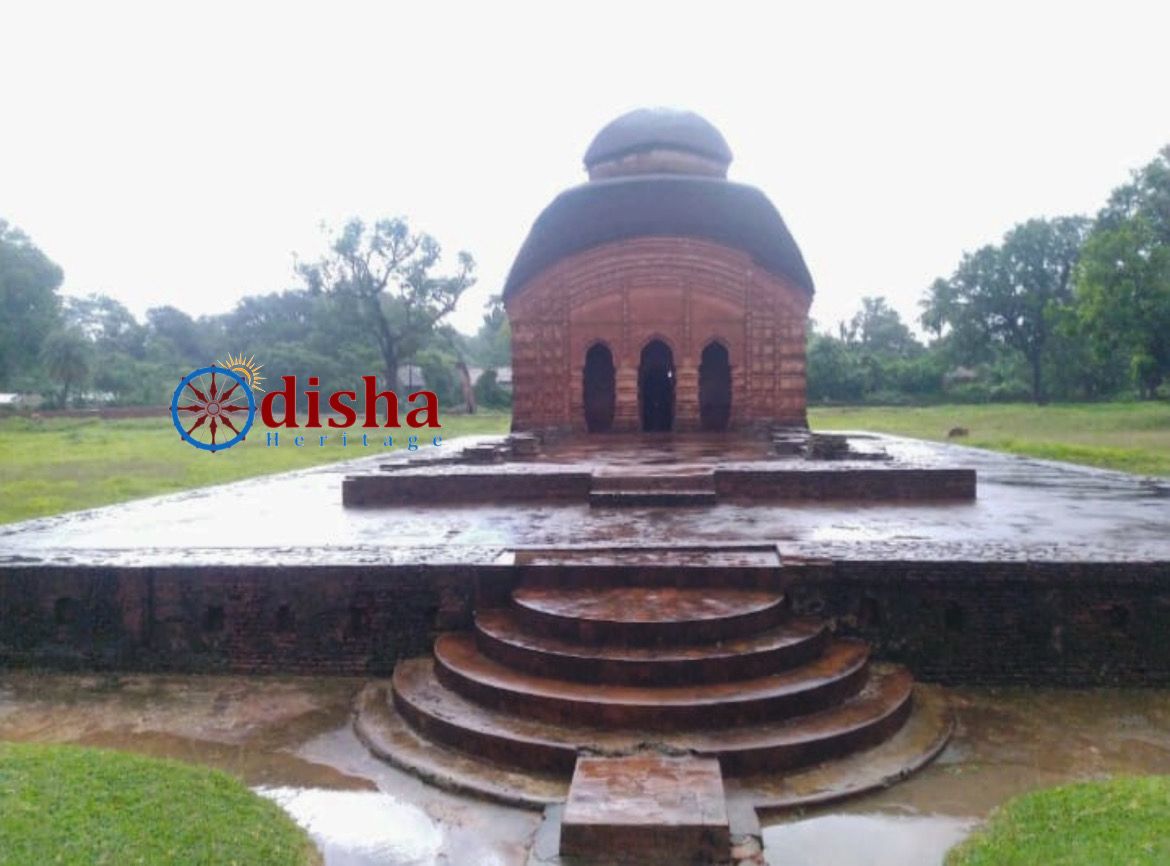
Within the 25-acre fort complex stand three significant temples Rasik Rai, Radha Mohan, and Jagannath bearing Mughal-style Vaishnavite influences. The Rasik Rai temple, restored by the Archaeological Survey of India (ASI), still retains its original grandeur. Interestingly, the brickwork of Haripur bears striking similarities to structures in Murshidabad, West Bengal, particularly the Namakharam Mahal. Both share the use of large rectangular bricks, approximately 18 inches long and 1.5 inches thick.
Manas Sahu, ASI conservation assistant, shared that efforts to replicate the original brickwork have enabled successful restoration of the Rasik Rai and Jagannath temples. However, the Radha Mohan temple remains in a dilapidated state. Also within the fort are underground chambers, believed by locals to be either prison cells or royal quarters.
Besides the temples, the area is dotted with pillars, domes, and tombs that echo the grandeur of the Bhanja dynasty. Two large ponds lie nearby—one perennial, the other dry except during monsoon. A local legend attributes the dryness to a queen’s curse.
A significant historical episode links the fort to Gajapati Prataprudradeva of Puri, who died near Haripur during a pilgrimage. His son-in-law, Jaganath Bhanj, commemorated him by establishing the Jagannath temple. Today, the deities are worshipped at Pratappur, a nearby village named after the Gajapati king, especially after the invasions of Kalapahada.
After Prime Minister Narendra Modi’s visit and foundation ceremony in January, Haripur fort has gained national attention. Restoration of boundary walls, gardens, and amenities is ongoing, offering a glimpse of renewed life for this relic of Odisha’s regal past.
