
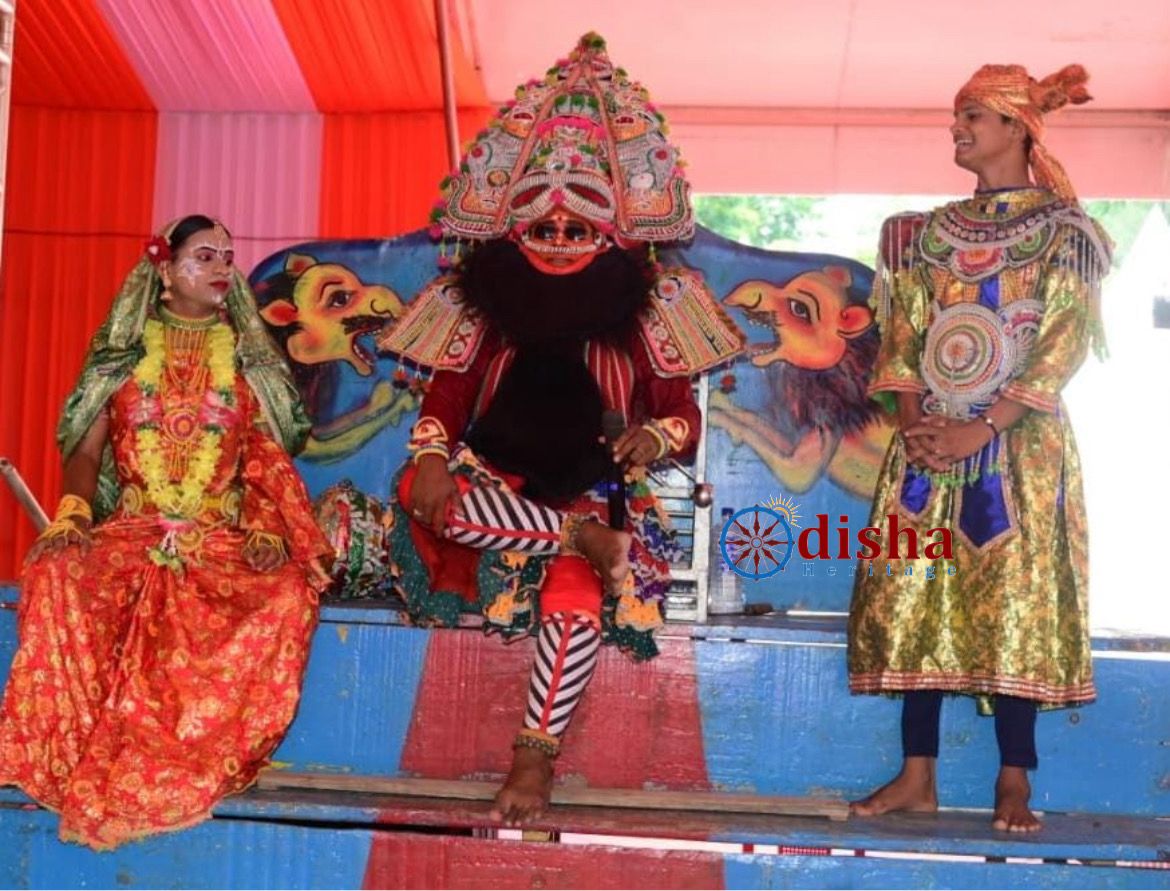
Prahallada Nataka: A Regal Legacy of Devotion and Drama
This vibrant theatrical tradition, recently showcased at the Odisha Vikas Mela 2025 in Berhampur, is more than just a folk play; it is a living heritage, deeply woven into the cultural fabric of southern Odisha.

In the heart of Odisha’s Ganjam district, Prahallada Nataka also known as Raja Nata continues to echo the timeless tale of devotion, defiance, and divine grace. This vibrant theatrical tradition, recently showcased at the Odisha Vikas Mela 2025 in Berhampur, is more than just a folk play; it is a living heritage, deeply woven into the cultural fabric of southern Odisha.
Originating in the 19th century, Prahallada Nataka was initially penned by Raja Ramakrusna Chhotaraya, the then King of Jalantara, now part of Andhra Pradesh’s Srikakulam district. However, the soul of the play, especially its poetic and musical depth, owes much to the genius of Gourahari Parichha, an eminent Odissi musician and poet from Paralakhemundi. His contributions enriched the narrative with classical Odissi ragas, making the performance a rare confluence of theatre, music, and spirituality.
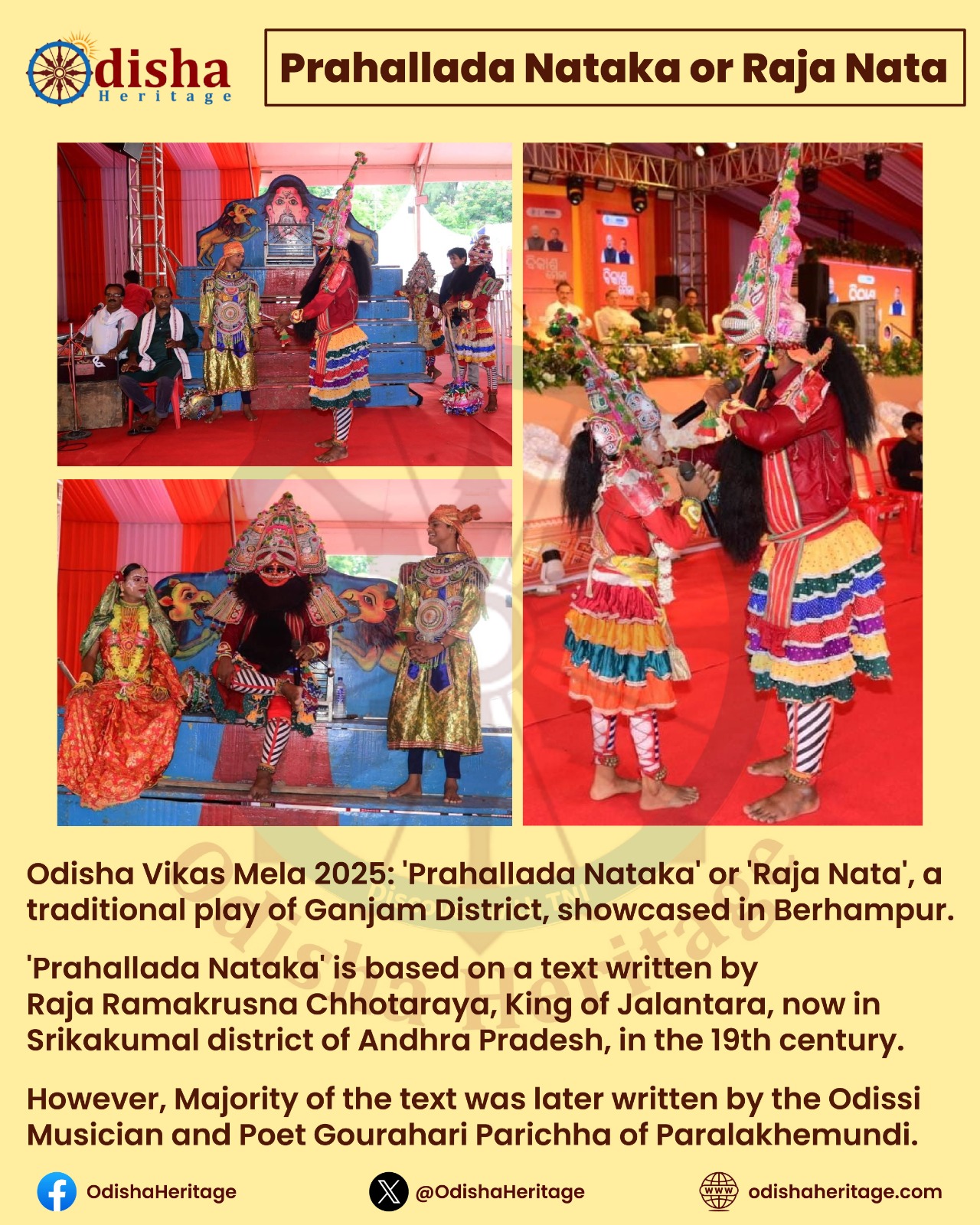
The play dramatizes the mythological tale of Prahallada, the devout son of demon king Hiranyakashipu, who remains unshaken in his faith in Lord Vishnu despite extreme persecution. The climax, marked by the divine appearance of Lord Narasimha, delivers a powerful message of unwavering devotion and divine justice.
In a world increasingly dominated by digital entertainment, Prahallada Nataka stood out as a reminder of the emotional depth and communal joy that traditional art forms bring. Its continued performance is a testament to the resilience of Odisha’s cultural treasures and the artists who breathe life into them.
